
Lead Generation Company In Chicago
Unleash your Business Growth Potential
With our proven Digital Ecosystem. Get Ready for 10X
» 360° Full Stack Digital Growth Marketing Services
» Business & Marketing Consultation / Mentorship
» Equity/Debt Funding & Business Loan Help
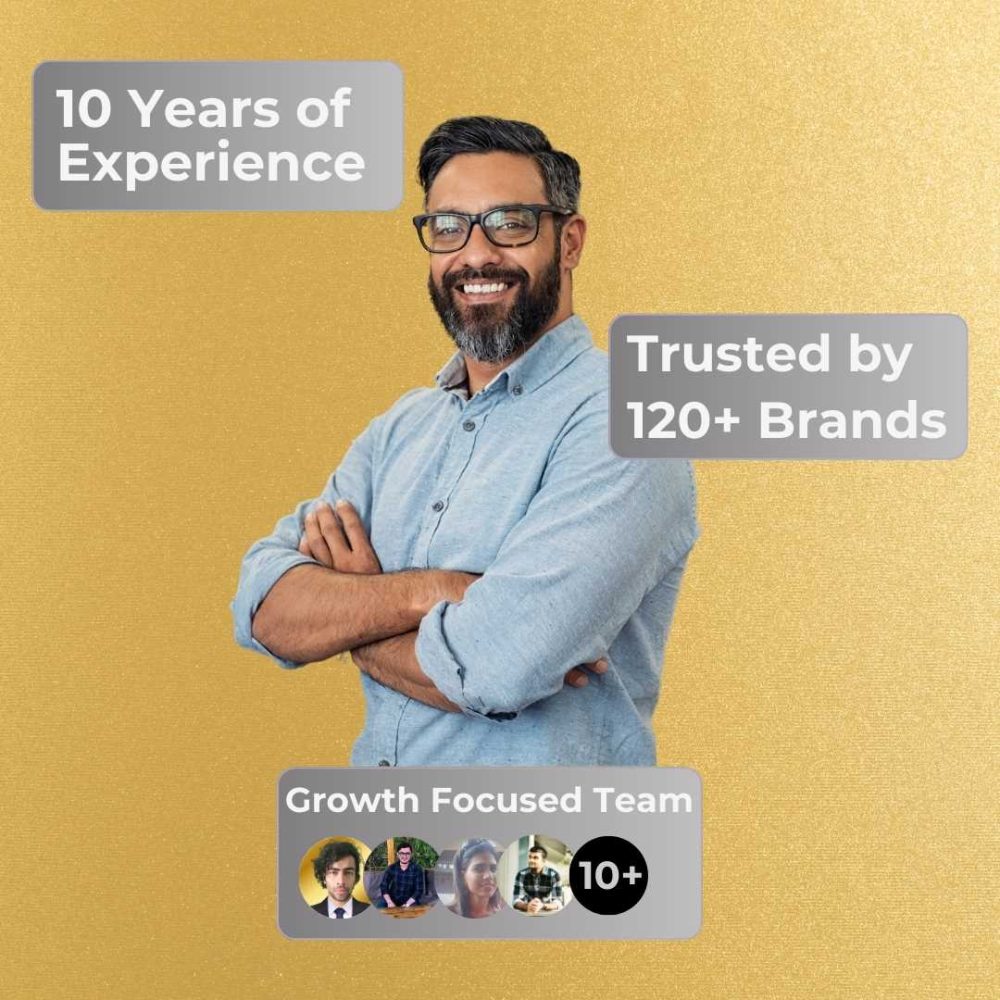
Trusted By 120+ Brands.































3
STEP GROWTH PLAN

5.7x
GROWTH IN SALES

60
MINUTE STRATEGY CALL

100%
WORK TRANSPARENCY
Business Growth Solutions




Our clients love us
See what real Business Owners & Entrepreneurs are
saying about Invincible Lion Team

Ajay helped us shape the go-to-market strategy and the “Digital Ecosystem” helped us get consistent leads and high-paying corporate clients.
Team Invincible Lion worked on multiple projects with us and also help our clients with lead generation.

Anand Ram
Founder, Advity Infomedia

Team Invincible Lion helped us with lead generation. Because of this, I was able to focus on product innovation.
Ajay is an expert professional and with deep understanding of Businesses and its marketing requirements.

Nagashayan
Project Head , The Third Dimension

Ajay’s Digital Ecosystem helped AttainU get consistent Qualified leads and sales for our coaching program at AttainU. We were able to reduce the CPL and were able to get a better leads-to-sales ratio. We also had to hire fewer salespeople to convert Qualified leads.

Vaibhav Bajpai
Co-Founder & COO, AttainU
How It Work
Tell us about your Business Growth Objectives
We will help you with a Blueprint & Plan
10X Growth Systems for your Business Success
Business Growth doesn’t
have to be difficult and Complex.
Strategies that scale
your Business 10X Faster

After connecting with Ajay, I realised how Important Marketing Automation is!! Earlier we used to hire freshers/interns for minuscule tasks but automation does it better and efficiently. “
Ashish Kumar – Director
Experts with Wide
Range of Experience
We understand business and we have a team that is proficient in executing top-quality results.

Highly professional, Prompt Response, Delivers on time, Easy to work with, Patient, and Truly Creative. I’m a happy Client
RamChandran, CEO
Let's Build Your Brand!

What makes Invincible Lion Different?
Invincible Lion is not a Marketing Agency, It’s your Growth Partner.
Our Core beliefs are Growth, Community, Brand Building, and Market Domination.
And we help you do the same for your Business keeping our core Business beliefs and philosophies in Mind.
We also believe that if you can grow your business revenue profitably, there will be almost no business problem you can’t solve.
And we will help you Build systems of Growth so that you generate more revenue and your business thrives.
Because Businesses are built on Trust, Transparency, Community feeling and Fundamentals of Human Life.
Ready to scale you Business to new Heights?
Let’s connect on a Free Discovery cum Strategy call for 10X Growth


Lead Generation Company in Chicago: How to Choose the Right Partner + Top Services, Costs & Local Tips
On the hunt for a lead generation company in Chicago, you’re likely trying to solve one of 3 problems: either you don’t have enough qualified conversations, your pipeline isn’t predictable, or your team spends too much time prospecting instead of closing. Chicago is a particularly fortuitous place to generate B2B momentum, with a dense concentration of headquarters, a broad Midwest reach, and a commercial culture that still has some fondness for relationships and referrals.
But the key to selecting the best Chicago lead generation agency isn’t so much about who promises you the most “leads.” It is all about finding a partner that gets your ICP, aligns with your sales motion, doesn’t tarnish your brand reputation, and can demonstrate performance with clean reporting/results. The leading lead generation services in Chicago, meanwhile, offer a combination of strategy (based on positioning + targeting), execution (outbound, LinkedIn, paid, SEO), and operations (CRM hygiene, qualification for handoff).
The guide explains exactly what a B2B lead gen Chicago service does (and doesn’t), what the price should be, how local factors impact performance, and what questions to ask before contracting. Plus, I’ll go over some actionable “local SEO Chicago leads” recommendations for service businesses and multi-location brands, as well as a sales process you should expect from any reputable outbound lead generation Chicago team.
If you need a partner who can handle multi-channel demand generation, appointment setting in Chicago, and pipeline ops without the spammy shortcuts, follow these checklists to evaluate options properly.
What a Lead Generation Company in Chicago Actually Does (and What It Doesn’t)
A Chicago lead gen company helps you create repeatable, measurable opportunities with the right prospects — then feeds those qualified opps into your sales process. What Trust and Safety Looks Like: Done well, it’s a heady brew of marketing, sales development, and revenue operations.
Lead generation vs demand generation vs appointment setting vs sales outsourcing
Lead generation: Your offer captures, or even better, creates prospects – it qualifies interest and moves people into your funnel (forms, calls, replies, scheduled meetings).
Demand gen agency life cycle: Generates awareness and activates intent over the journey (content, paid, events, nurture). Now, not all demand gen efforts lead directly to “leads,” but they raise conversion rates across the board.
Appointment setting: More focused — set appointments for your sales staff. Quality is determined by targeting and qualification criteria.
Door-to-door sales: More than just meetings – might even expand to full-cycle selling, proposals, and closing. This calls for more product expertise and stricter governance.
A good type of lead generation partner knows how to mix the two—without muddying “activity” (emails sent) with results (qualified pipeline).
Sources of leads include inbound, outbound, partner, events, ABM, and paid media.
Common lead sources include:
Source of leads: SEO, content, website conversion, webinars.
Outbound: cold email, calling, LinkedIn outreach.
Partnership: channel partners, resellers, integrations, referral programs.
Events: conferences, meetups, trade shows, and hosted breakfasts.
ABM: account-based marketing programs directed at named accounts with synchronized touches.
Paid media: Google Ads, LinkedIn Ads, retargeting (best when complemented with strong landing pages and qualification).
MQL, SQL, SAL: definitions of keys that Chicago agencies and clients are using
MQL (Marketing Qualified Lead): Prospect that has self-identified who meets basic fit/intent signals (i.e., right industry + downloaded asset).
SAL (Sales Accepted Lead): Sales rep agrees it is worth further pursuing (confirmed fit and a valid contact).
SQL (Sales Qualified Lead): Intent shown; next step defined (discovery call booked; budget timeline needs to be established).
You must get these definitions on paper, or “pay per lead” deals become legal battles.
Common engagement plans—project, retainer, performance-based, and hybrid
Project: Short engagements (setup, list build, messaging, landing pages).
Retainer: Monthly execution across all of the above channels (typical for SDR agency Chicago offerings).
Performance-based: Pay per lead/meeting/opportunity. Could work, but only with strict qualifications and fraud/no-show protection.
Hybrid: Base retainer + performance bonuses (the standard, typically the healthiest alignment).
What to look for in a Chicago lead gen company (and what not to)
Right fit when:
- You have your ICP down (or ready to validate it quickly).
- You have a sales team that can respond quickly.
- You have a strong and articulable offer (not “we do everything”).
Not a fit when:
- You seek quick results for business-to-business transactions.
- Your squad is not good at holding on to a lead.
- You refuse to agree on messaging, compliance, and qualification criteria.
Why Chicago Is a Strong Market for Lead Generation (Local Advantage Explained)
Chicago is not simply a big city; it’s a commercial “bridge” between coastal markets and the Midwest. That provides some very real lead-gen advantages across most industries in Chicago and Chicagoland.
Chicago, being a Midwest hub: B2B headquarters density and regional scope
Many B2B decision-makers are based in Chicago HQs and operate nationally. Win Chicago, and you frequently win the Midwest footprint — and supplier networks that stretch into Indiana, Wisconsin, Michigan, and beyond. That means for B2B lead-generation Chicago campaigns, just one metro can open pipelines across multiple states.
Key local buying centres: Loop, River North, Fulton Market, West Loop, Schaumburg corridor
Varying pockets indicate varying buying habits:
The Loop: typical corporate HQs, finance, legal, and big procurement teams.
River North/Fulton Market/West Loop: high-growth tech-forward operators, agencies, SaaS, modern buying behaviors.
Schaumburg corridor: regional enterprise operations, logistics, manufacturing-adjacent networks, and regional offices.
Targeting may reflect this—especially with appointment-setting, Chicago relevance needs to be front-of-mind, fast.
Vertical mix that influences lead gen strategies (such as manufacturing, logistics, finance, health care, and SaaS)
Chicago’s mix forces versatility:
Manufacturing/logistics: relationship-centred, spec-driven, long cycles.
Finance/insurance: compliance-heavy and trust-led.
Health care: credibility, evidence, and cautious outreach.
SaaS/IT: ABM, intent signals, demo-driven conversion.
Local channels and connecting opportunities (chambers, trade assn., meetups, conf.)
Many Chicago lead generation agency offerings perform best when local trust is backed by digital outreach:
- Chambers and business groups
- Trade associations
- Niche meetups and founder/operator communities
- Metro-based industry conferences
How to Evaluate and Hire the Best Lead Generation Company in Chicago
If you’re looking for the top lead gen agency that Chicago companies seek out, start by cleaning up your inputs. Lead generation is no magic — it’s a process. Agencies will be able to game the system, but you have to define what “good” means.
ICP and Buyer personas are your friends (role, industry, company size, tech stack, etc.).
Before you hire, define:
Industry: What are the fastest converting verticals? Which are “nice to have”?
Role: Economic buyer vs champion vs influencer (VP Ops vs IT Director vs Procurement).
Size: Establishment revenue size bands, full-time equivalent estimates, and point locations.
Tech stack/constraints: For HubSpot direct marketing Chicago campaigns, understand whether targets use their platform, Salesforce, or Shopify, etc. Technographics can refine lists and messaging.
And if you can’t define it perfectly, formulate a hypothesis and run validation sprints.
Write down what a “qualified lead” means (criteria)
Create a one-page checklist. Example criteria:
Fit requirements: industry, size, geography, job title/seniority
Must have intents: request demo, respond with a problem statement, and affirm discovery
Disqualifiers: students, consultants, vendors, competitors, and lack of budget authority.
Minimum meeting standard fulfilled (agenda confirmed + stakeholder role confirmed)
This prohibits “quantity over quality” behavior and performance marketing; Chicago B2B reporting becomes real.
Select your region of interest: Chicago only vs Midwest vs US overall
Determine where your sales team can win:
Chicago-only: great fit for service businesses, local providers, and tight territory plans.
Midwest: expands TAM while keeping messaging regionally relevant.
National: is suited for scalable B2B offers with significant proof and a dependable fulfillment engine.
And the geographic decision matters because it influences list price, ad targeting, and messaging tone.
Set Trackable Goals: pipeline value, meetings scheduled, CAC, conversion rates
Set revenue-related goals:
- Meetings scheduled and meetings scheduled that actually occurred (so show rate counts)
- Conversion to opportunity
- Latch-on created (e.g., in a $250k pipeline/quarter)
- CAC or cost per opportunity
- Speed-to-lead (for inbound follow-up)
- Avoid goals like “10,000 emails/month.” Activity is not a KPI.
Choose your sales motion – inbound follow-up, cold outbound, or ABM
Taper the agency to your move:
Inbound follow-up: Velocity, routing, CRM discipline.
Cold outbound: quality of the list, deliverability, skill, and ability of calling, Objection handling.
ABM: account selection, signals, multi-touch orchestration.
If you are purchasing sales outsourcing services in Chicago, define whether they manage discovery only or the entire cycle.
What to have ready before reaching out to agencies (assets, case studies, offers, CRM access)
You’ll go even faster with:
- A well-defined offer (not a generic “free consultation” unless that’s what you’re tweaking and it’s converting)
- 2–5 proof points (case results, testimonials, logos you can reference)
- Minimum or list/base price points (even if range or per container)
- CRM access plan: who can create fields, stages, and reports?
- Sales calendar rules and expectations around handoff
- Savvy clients get better results from the lead-generation services Chicago groups provide.
Services Offered by Chicago Lead Generation Companies (Pick the Right Mix)
Most of Chicago B2b marketing services cross over, but the best collaborators make it easier for you to select the right mix, not to “do all” from scratch.
B2B outbound prospecting (email + phone) and sdr-as-a-service
The outbound lead generation Chicago services of an organization will generally include:
- ICP refinement and segmentation
- Lead list building + validation
- Cold email sequences, with A/B tests
- Blocking for priority segments
- SDR-as-a-service with dedicated reps, QA, and handoff.
Critical drivers of success: deliverability, relevance (including iteration speed), and scrub qualification.
LinkedIn lead gen (personal branding, outreach, Sales Navigator flows)
LinkedIn lead generation in Chicago is ideal for:
- More high-ticket B2B where trust is important
- Colder audiences who dismiss cold email
- Founder-Led direct and C-Level networking
Typical components:
- Profile optimization (positioning, proof, CTA)
- Connection + message flows
- Sales Navigator list building
- Commenting/engagement to warm accounts
- Light ABM plays around target accounts
Setting up appointments and managing your calendar
Such appointment booking Chicago services ought to include:
- Qualification questions and disqualifiers
- Workflow scheduling (buffers, time zones, round-robin)
- Reducing no-shows with confirmations and reminders
- Reprioritize how to handle and follow up on sanctions
If the agency can’t justify how they lower no-shows, you should expect inflated “meeting counts.”
ABM (account-based marketing): target account lists, intent signals, multi-touch plays
What account-based marketing programs target:
- Account-based lists (50 -500 accounts)
- Purchase group mapping (3–8 contacts/account)
- Intent signals (site visits, content consumption, keyword intent where relevant)
- Multi-touch plays: email + LinkedIn + ads + events
ABM is a great fit for enterprise deals and complex sales cycles, not quick-transaction plays.
Paid lead gen Google Ads, LinkedIn Ads, Meta (when it works for B2B), landing pages
Paid is powerful when:
- You have a strong offer ( demo, assessment, webinar, ROI calc)
- Designed for conversion (Fast, focused, and credible) [ LandingPages]
- Follow-up is fast
Channel notes:
Google Ads: particularly effective for high-intent search, such as “lead generation company near me, Chicago”- style searches (if you are an agency) and local services.
LinkedIn Ads: best for job-title targeting in B2B; CPL likely higher, but fit is strong.
Meta: can be useful for B2B retargeting and some hyper-targeted offers, but never a stand-alone driver.
Content + SEO for leads that come in (local, national, industry)
Inbound is compounding:
Local SEO Chicago leads: service-area pages, Google Business Profile, reviews.
National SEO: category pages, comparison pages, solution pages.
Industry SEO: vertical pages (e.g., “cybersecurity for manufacturing”) aligning with buyer intent.
A Chicago-based demand generation agency could use SEO with email capture + nurture.
Lead qualification, enrichment + data ops (firmographics, technographics)
Data ops improves every channel:
Firmographics: size, revenue, locations, NAICS, etc.
Technographics: What tools they use (when available)
Upgrades: phone, LinkedIn URLs, HQ location
Validation: email validation + no bounce
This is the unsexy difference between “spray and pray” and a predictable pipeline.
CRM configuration and pipeline maintenance (HubSpot, Salesforce, Zoho, and Pipedrive)
Whether it’s Salesforce lead generation, Chicago tracking, or HubSpot automation, agencies can handle:
- Lifecycle stages and pipelines
- Lead source tracking
- UTM governance
- Deduplication and routing rules
- Meeting, opportunity, and pipeline dashboards
- Without CRM hygiene, you can’t quantify ROI or scale.
Lead nurturing: sequences, webinars, WhatsApp/SMS (where allowed), remarketing
Not everyone is ready now. Keeps you top of mind. Nurture:
- Drip sequences mapped by industry and pain point
- Webinar invitations and follow-up after the event
- Remessaging to site visitors and active accounts
- SMS/WhatsApp only when suitable and compliant (often more prevalent in existing-customer or opt-in flows)
- Effective nurturing lowers CAC and increases win rates—particularly in long-cycle Chicago B2B sectors.
Industries in Chicago That Commonly Use Lead Generation (and How Tactics Differ)
The Chicago economy is diverse, so “one playbook” will not suffice. Chicago’s best B2B lead generation teams adjust their messaging, channels, and qualification to the buying reality.
Manufacturing and industrial (distributors, OEMs, machine shops)
What works:
- Spec and capability-based messaging (tolerances, certifications, lead times)
- Engineers and ops personas (not just procurement)
- Industry case studies (automotive, food packaging, industrial equipment)
- Longer nurture and multiple stakeholders outreach
Avoid: overpromising speed or throwing out generic “cost savings” claims that they can’t back up.
Logistics, freight, & warehousing – lane-based targeting and seasonal demand
What works:
- Lane or facility-based targeting (regions, ports, rail hubs, warehouse footprints)
- Timing of seasonal peaks outreach
- Key qualification: volume of shipments, how often they’re shipped, contract length
- When urgency is high, phone can trump email
Health, clinics, medtech – compliance-messaging and trust signals
What works:
- Trust-first narratives (results, patient safety, operational impact)
- Conservative listproc and strict opt-out handling
- Evidence: certifications, SOC2/HIPAA-aligned posture where applicable, references
- Information that teaches, not sells.
Financial services, insurance, fintech: regulated claims, depth of qualification
What works:
- Exact language (no dangerous “guarantees”)
- Depth of qualification (risk, compliance, current vendor, decision process)
- ABM for big companies; outbound for mid-market
IT services, SaaS, cybersecurity: ABM + intent data + demos
What works:
- Low ICP (Stackability, maturity level, pain knowledge)
- ABM plays that are designed to reach into target accounts
- Quickly iterate on messaging around replies and call results
- Conversion optimization of demos (pre-call content, clear agenda, role mapping)
Property, building, home services (Chicagoland): local SEO + reviews + call handling
What works:
- State-based pages must be linked to Google Business Profile and location pages
- Velocity and approach review
- Call process and booking procedure (missed calls = missed revenue)
- Local targeting for Neighbourhood/suburb in Chicagoland for both lead generation and traffic.
Lead Generation Process: Step-by-Step Workflow You Should Expect
A good company should have a proven, repeatable process. Here’s the process you should follow — no matter your channel mix.
Discovery and positioning, offer (workshop, differentiators, proof)
You should start with:
- ICP and segmentation decisions
- Call to action (free trial, quote, demo, consultation)
- Differentiators and proof points
- List of Objections and how to deal with them
- Tone and compliance requirements
- Doing this ensures that there are no random campaigns or inconsistent SDR messaging.
List build and data check (target accounts, contacts, validating)
Expect:
- Build Target account list (by Industry, Size, Tech stack, Geo )
- Contact mapping (buyers & influencers)
- Email verification and bounce protection
- Data enrichment (phone, LinkedIn, HQ info)
- Bad data kills deliverability and burns through calling time.
Messaging – cold email copy, call scripts, LinkedIn scripts (A/B test)
Professional messaging includes:
- 2-4 Email Angles (Pain, Trigger Event, Proof, Offer)
- Telephone scripts with discovery and objection lenses
- Other notes and follow-ups to my LinkedIn connections
- A/B testing on subject lines, CTAs, and personalization depth
Launch and ramp-up (what happens during the first 2–4 weeks)
First month typically looks like:
Week 1: domains, deliverability set up, final lists, scripts approved
Week 2: low send volumes, early calling, rapid feedback loops
Week 3: volume scaling, targeting refinement, and better qualification!
Week 4: stability KPIs, formation of repeatable weekly cadence
If someone’s promising you “hundreds of SQLs in week one,” it’s usually not worth it.
The loop of optimisation: deliverability, reply rates, connect rates & meeting rates
Weekly optimization should cover:
- Making sure that you can reach inboxes and not get more spam points
- Positive response rates and reasons.
- Call connect time and best time to dial
- Meeting booked vs held rate
- Performance by segments (industry, title, and size)
Handoff to sales, note, recording of call, etc., next steps, pipeline ownership
A clean handoff includes:
- Notes (pain points, context, who are the stakeholders)
- Recordings of calls for QA (as allowed by law)
- Updated CRM fields (source, persona, segment)
- Clarity of ownership: who does, what next, by when, and in which order
Without handoff discipline, even good appointment-setting results in Chicago underperform.
Pricing in Chicago: How Much Lead Generation Companies Typically Cost (and What Drives Cost)
Lead generation pricing in Chicago varies widely because the work ranges from basic appointment setting to full multi-channel demand gen. The real question is: what are you buying—activity, meetings, pipeline, or revenue?
Conventional pricing strategies (like retainer, per lead, per meeting, rev share)
Retainer: Monthly retainer and fee for SDR, strategy, and reporting. Most common for B2B.
Per lead: “Pay per lead Chicago” model–only works well if qualification is strict and auditable.
Per meet: Pay per meeting scheduled/held. Make sure that “held meeting” definitions and no-show policies are in place.
Revenue share: Uncommon in pure lead gen; more common in sales outsourcing in Chicago, where the partner also influences closing.
Some hybrid models might be beneficial: base + performance bonus.
Key cost drivers: niche complexity, seniority of buyers, list quality, compliance, channel mix
Costs rise when:
- You sell into tight or specialized niches
- You’re selling to VP/C-suite prospects with little time on their hands
- You’ll have to look up and confirm numbers manually for your list
- More constraints around compliance (finance/healthcare)
- You contribute channels (paid + outbound + ABM + content)
Budget bands – Starter vs Growth vs Enterprise (how to map spend to outcomes)
Note that these monthly ranges will vary by brief type and the relative responsibility for profitability.
Starter: prospecting outbound and/or LinkedIn with basic reporting.
Growth: multi-channel outbound + LinkedIn + nurturing + stronger ops.
Enterprise: ABM programs, intent workflows, deeper content type integration, tighter sales alignment, more stakeholders.
Mapped budget to outcomes: Figured out how many qualified conversations you need to get to hit pipeline targets (not “emails sent”).
Hidden cost to make it clear: tools, data, ad spend, landing pages, CRM seats, and call minutes
Ask what’s included vs extra:
- Data tools and contact credits
- Email warm-up/inbox tools
- Ad spend (excludes management fees)
- Landing page builds, CRO, and tracking setup
- CRM seats and integrations
- Call minutes, dialer cost, and recording storage
The latter can go a long way toward swinging the total cost.
ROI math for founders: pipeline needs, close rate assumptions, payback period
Use simple math:
If your average deal size is $25K and you close 20% of qualified meetings, then you need ~5 qualified meetings to make 1 deal.
If you need $250k in new revenue/quarter, i.e., 10 deals → ~50 qualified meetings/quarter.
Then evaluate spend against:
- Pipeline generated expected value (not just meetings)
- Payback Period (how many months to pay back CAC)
- Capacity (can your team close that volume in practice?)
Any good SDR agency in Chicago will help you model this before you hire.
What to Ask Before Hiring a Lead Generation Company in Chicago (Interview Checklist)
Approach agency selection as you would hiring a revenue leader. You’re entrusting them with your brand, your domains, and your pipeline data.
The Questions on targeting and list sourcing (and red flags)
Ask:
- What is your list-building process — research, databases, partner data?
- Can we preapprove the ICP segments?
- Do you filter out competitors, current customers, and “do not contact” lists?
Red flags:
- “We already have a big list” with no way to segment.
- Not willing to provide sample records (anonymized)
Questions on deliverability and domain reputation (SPF/DKIM/DMARC, warm-up)
Ask:
- Do you create your own SPF/DKIM/DMARC records and monitor your reputation?
- How many inboxes and/or domains do you have, and why?
- How long is your warm-up and ramp plan?
Red flags:
- Delivering a high volume from your main corporate domain straight away
- Nothing regarding authentication or inbox delivery
Quality assurance questions: Call and script development, training
Ask:
- Who scripts and signs the script?
- Are calls tracked and SDRs coached weekly?
- What’s your approach to objections and compliance barriers?
Red flags:
- No QA process, no call reviews, no coaching cadence
Reporting Questions: dashboards, cadence, attribution
Ask:
- What is included in the weekly report (segment performance, meetings held, pipeline)?
- Can you report in our CRM?
- How do you account for multi-touch credit?
Red flags:
- Reporting via vanity metrics (sends, opens) only
- There’s no transparency on targeting or message types
Questions about team composition: strategist vs SDR vs media buyer vs content
Ask:
- Who is your day-to-day operator, and who is doing the strategizing?
- If paid is part of the package, who controls the ads and landing pages?
- Who is in charge of deliverability and data ops?
Red flags:
- A jack of all trades, master of none.
- Hands off all the time with no real “owner.
Who owns what (data, domains, ad accounts, creatives, landing pages, etc.)
Ask explicitly:
- Domains, Inboxes, and warming assets in our own possession?
- Do they give us ad accounts and pixels?
- Do we have landing pages and copy?
- So what if we don’t work together?
- Clarity of ownership prevents painful rewrites later on.
Red Flags and Common Scams in Lead Generation (How to Protect Your Business)
Lead gen attracts bad actors because it is easy to sell “promises” and hard for buyers to verify quality rapidly. You can defend yourself with clear definitions and transparency.
Without qualifying it, “Guaranteed leads.”
A guarantee is no guarantee if “lead” can refer to anyone who responds with “interested.” Need qualification and acceptance rules in writing.
Risk from purchased lists and spam (blocklist, brand damage)
Self-prospecting is better than purchasing a list, which often includes out-of-date, scraped, or non-consenting contacts. Risks include:
- Reputation harm for the domain and IP
- Blocklisting and reduced deliverability
- Disparaging a brand that may have future outreach
- The second is slower but more sustainable: ethical list building.
Bubbled meetings (no shows, irrelevant titles, fake interest)
Watch for:
- Appointments with interns or non-related roles
- High no-shows with no intervention
- “You interested too?” responses obviously falling apart upon the most cursory of investigation
- Where you can, pay for held meetings or accepted leads.
Lack of transparency on channels, scripts, or targeting logic
If they won’t show:
- Targeting filters
- Sample lists
- Message scripts
- A/B test results
You’re unable to manage risk or improve outcomes.
Non-Attentive stance to compliance and consents
A good partner is talking about opt-out rules, do-not-call hygiene, and respectful frequency. If they shrug it off, walk away.
Promise unrealistic timelines for complex B2B deals
ABM in the enterprise and highly regulated industries is a slow burn. Be wary of “instant pipeline” promises when your average sales cycle is 6–12 months.
Compliance and Trust: Data Privacy, Calling/Text Rules, and Email Practices (US + India Context)
Compliance is not an option — it’s part of conversion. Prospects are far more likely to open doors when marketing clarity and decorum prevail.
US considerations: CAN-SPAM Foundation and outreach compliant behaviours
For email outreach:
- Be transparent in sender identification and subject lines
- Provide an easy way to opt out and honor those requests without delay
- Specify a real business address (where necessary)
- Also, follow “best practice compliance”:
- Keep frequency reasonable
- Avoid deceptive personalization
- You can use suppression lists across campaigns
Calling/SMS considerations: consent-first approach and do-not-call hygiene
Disinfect phone calls and texts:
- Hold internal do-not-call lists and honor them promptly;
- Document consent where applicable
- Do not break laws while dialing, and stop irresponsible behavior
- For SMS in particular, “consent-first” helps your brand avoid complaints.
Data management: access controls, retention, vendor tools, privacy
Ask your partner about:
- Who has access to your CRM and lists
- Role-based permissions and MFA
- Data retention policies (e.g., how long they keep lists, recordings)
- Encrypted storage of call recordings and exports
- A good lead is good data ops discipline.
Things you should have in your contract: (NDAs, DPAs, SLAs, security questionnaires)
At minimum, consider:
- NDA for confidentiality
- A DPA (Data Processing Addendum), if any personal data is processed
- SLAs around reporting cadences, response times, and handoff rules
- An optional, easy-going security questionnaire if CRM access is being requested
- This fosters trust and avoids surprises later.
Local SEO and “Near Me” Leads in Chicago (For Service Businesses and Multi-Location Brands)
If you service the Chicagoland area, “near me” searches can be a high-intent lead source. Local SEO leads generally convert better than cold traffic.
Chicagoland giveaways for Google Business Profile optimisation
Focus on:
- Accurate primary category and service categories
- Services and service areas (including suburbs you do service)
- Images that demonstrate real work, team, and location signals
- -Weekly posts (deals, updates, FAQs, etc.)
- Hours and holiday hours of operation must be precise
- GBP is commonly your best conversion asset for discovery work like “lead gen company near me, Chicago”—particularly on mobile.
Reviews strategy (collection, response, and speed) and trust-forming concept
A practical review system includes:
- Asking at the right time (when you had a delivery success)
- With a simple link + short message
- Replying to every review (even “small” ones)
- Keep a consistent speed (no chopping that looks unnatural)
- Reviews are a conversion asset, not a vanity metric.
Shopify’s location pages – Neighbourhood targeting (Loop, Lincoln Park, Wicker Park, Naperville, Evanston)
Work on actually useful location pages:
- That area’s In Your Area services
- Evidence and images about local customers
- FAQs and “what it costs” (when available) range concerns pub.читайте详细
- Strong CTAs: call, form, booking
- Just say no to thin pages; only exchange local names.
Local citations and NAP consistency
Keep your Name, Address, Phone (NAP) consistent on:
- Website
- GBP
- Directories and industry listings
- Social profiles
- Unreliability causes ranking and trust problems.
Local link building: community partners, sponsorships, local publishers
Earn local authority through:
- Advertising and sponsorships (youth sports, local events)
- Partnerships with community organizations
- PR stories and features from your area
- Supplier/vendor partner pages
- These are the links that help with rankings and credibility.
Convert Local Traffic: Call Tracking, Chat, Forms & Booking Tools
There is high-intent local traffic – Don’t let it go to waste:
- Introduce call tracking (without compromising NAP consistency)
- For superfast answers, use chat
- Consider short and mobile-friendly forms
- Provide booking widgets for consultations or site visits
- Conversion is where the vast majority of local SEO programs succeed or fail.
How to Measure Lead Quality and Performance (KPIs That Matter)
The goal isn’t “more leads.” The desired outcome is more revenue, faster, and less wasted effort. Monitor target KPIs from the top of the funnel through the pipeline and wins.
Top-funnel metrics – deliverability, opens, reply rate, and click-through ratio
For outbound lead generation in Chicago:
Deliverability/inbox placement: the foundation
Open rate: for directional purposes only (privacy changes have ruined it)
Response rate: a more relevant number, particularly a positive response rate
CTR: good for paid and nurture emails, less important for cold outbound
Middle metrics: qualification rate, meeting held rate, show rate, conversion to opportunity
These are “quality truth” metrics:
- Qualification rate (SAL/SQL rate)
- Booked vs held – % of how-called turned into meeting held rate.
- Attics by Channel & Persona
- What does not work for us in such a context: Conversion from meeting to opportunity
- Focusing on your prospects. If meetings are high but opportunities look low, the targeting or messaging might be off.
Revenue metrics: pipeline generated, win rate, CAC, LTV: CAC
Measure:
- Produced pipeline (source attributed)
- Win rate by channel/segment
- CAC by AD ads (ADS + ARG + tools)
- LTV: CAC for scalability
And that’s where Chicago B2B performance marketing gets down to real business math.
Attribution in the real world: multi-touch vs last touch and practical reporting
Perfect attribution is rare. Use a practical model:
- Track first touch: (where their entry point occurred)
- Meeting source: Track where the meeting came from (who booked the meeting)
- Influence tracking (retargeting, nurture, events)
Then run simple weekly insights into what’s creating qualified conversations, not just clicks.
Performance cards and weekly review agenda (what to ask every week)
Weekly scorecard should include:
- By stage: Sends, positive responses, meetings scheduled, attended
- QA insights: objections topped, message variations, call results
- The pipeline: Sales opportunities generated, stage movement, next steps
Weekly agenda questions:
- What changed this week and what it means.
- Which segments are improving/declining?
- What will we try next week?
- What does sales need to follow up more quickly?
Integration With Your Sales Stack: CRM, Calendars, Recording, and Automation
The best SDR agency in Chicago can’t scale results without clean systems. This is where many lead gen programs subtly implode.
CRM setup best practices: stages, fields, lead sources, deduplication
Ensure your CRM has:
- Stages were defined (Lead → SAL → SQL → Opportunity)
- Mandatory fields (persona, segment, source, campaign)
- Lead source discipline (don’t let “other” be everything)
- Dedup rules and Ownership rules
This matters for both HubSpot lead generation and Salesforce lead generation setups.
Calendly scheduling
For smooth scheduling:
- Route with segment/territory-based rules
- Distribute in a round robin for fairness and speed
- Control your own time zone and don’t get buried in CST / IST confusion
- Automated no-show reducing reminders
Call transcription and QA process
Call recordings help:
- Coach SDRs quickly
- Validate lead quality disputes
- Enhance scripts with demonstrable proofs
- Establish storage, access, and retention rules on the front end.
Lead enrichment and verification (what do we want to rank for)
Prioritize tools that improve:
- Contact accuracy (email/phone verification)
- Role and company matching
- Basic firmographics to help you qualify
Don’t overpay for “fancy” data that doesn’t change targeting decisions.
Automation boundaries: what should stay manual to protect quality
Automate:
Dispatch, reminders, and elementary follow-up from reporting pulls
Keep manual:
- A judgment of qualification on an edge case
- Personal notes and Handoff context
- ABM outreach on the line for top accounts
- Automation should add consistency, not take away relevance.
Recommended Engagement Plans (Choose Based on Your Stage)
Different stages require different lead-generation services from Chicago companies. Select a plan that aligns with your level of maturity, sales, and proof.
Plan A: Early stage startup (validate ICP + first 10–20 meetings/month)
Best for:
Founders validating who is purchasing, and why
Includes:
- ICP hypothesis + segmentation
- Light outbound + LinkedIn
- Tight feedback loops with founder(s)
Success at 30/60/90:
30: initial meetings scheduled, objections charted
60: best segment discovered, messaging congealed
90: predictable sequence to recall meeting flow and initial strategies influenced
Plan B: Growth (multi-channel outbound + paid + nurture)
Best for:
SDR/AE capacity teams and an offer that is crystal clear
Includes:
- Outbound + LinkedIn + retarget
- Landing pages and lead magnets
- Drip nurturing for non-ready prospects
Success at 30/60/90:
30: channels live, baseline KPIs set.
60: conversion rates rising, meetings held increasing
90: pipeline targets hit on average with segment-level predictability consistently above grad level and never below their human counterpart.
Plan C - Enterprise/ABM (target accounts, intent, sales alignment, long cycles)
Best for:
High ACV, multi-stakeholder buying
Includes:
- ABM lists, buying committee mapping, etc.
- Multi-touch plays + sales orchestration workshops.
- More outreach and executive nurturing for longer periods
Success at 30/60/90:
30: ready with account selection, wrecks constructed
60: target accounts with increasing levels of engagement
90: establish early-stage pipeline, clear learnings on which plays drive meetings
FAQ: Lead Generation Company in Chicago (Quick Answers to Common Questions)
How long does it take to start getting leads in Chicago?
Outbound can make some early responses happen in 2 weeks to a month, but reliable, qualified meetings typically stabilize after 6–10 weeks of testing and optimization. Inbound (SEO) typically takes longer.
Is it better to hire a Chicago-based agency or a remote team?
Either can work. Pick on the strength of maturity, openness, and performance. A Chicago-based lead generation agency can contribute local market knowledge and relationships, for example, while a remote team may offer cost efficiencies and expanded coverage.
What’s a realistic number of meetings per month for B2B?
It’s going to vary depending on other factors, e.g., niche, ACV, and targeting tightness. Ranges are flexible, so lists, messaging, and deliverability dictate the range you should be in to meet goals (when product/match fit exists).
Should I pay per lead or per meeting?
Pay per meeting is often more auditable than pay per lead—if you have a good definition of “held meeting” and qualification. Pay-per-lead works for inbound-heavy programs with easily scrutinizable lead quality.
What is considered a “qualified lead” for my industry?
A valid lead is a fit (based on your qualification criteria for industry, size, and role) + intent (they’ve agreed to a discovery step or have expressed pain or asked for pricing). Write this out by industry and persona.
Can a lead gen company also close sales?
Some can, with sales outsourcing agreements in Chicago. But to close, you need more product knowledge, price authority, and a closer operating model. Many companies prefer lead gen + internal closing for greater control.
How do we avoid spam and protect our domain reputation?
Use authenticated domains (SPF/DKIM/DMARC), warm up well, manage volumes sensibly, and personalize relevance (not fake salty tokens) – combined with being very good all year round on your opt-out/suppress hygiene. Avoid purchased lists.
What documents should we sign (NDA, SLA, DPA)?
It has the standard fare – an NDA, an SLA nailing down reporting and performance expectations, and a DPA if personal data is processed. If the CRM is in the mix, include basic security criteria.
Can they target specific neighbourhoods or suburbs in Chicagoland?
Yes. For organic and paid local SEO in Chicago, you may want to target the Loop, Lincoln Park, Wicker Park, and suburbs like Naperville or Evanston. For B2B outbound, you can segment by HQ or office footprint.
If you want a partner that combines B2B lead generation and execution with clean CRM reporting, compliance-first outreach, and real pipeline outcomes, Invincible Lion can help. We build targeted outbound LinkedIn lead-generation campaigns, ABM programs, and inbound SEO systems—then tie everything back to meetings held, opportunities created, and revenue.